We’ve just returned from Bali after 11 extraordinary days with Margot Anand, founder of SkyDancing Tantra®, and the international SkyDancing community.

There were purification rituals beneath waterfalls, temple ceremonies, beautiful gardens, snorkeling through reefs filled with vibrant fish, laughter with old friends, and long conversations about life, love, awareness, and awakening.

Many times during the trip we thought, “We should write about this.”

And yet… we didn’t.

Projects paused. Emails were answered more slowly. Devices stayed tucked away more than usual.

Listening to our bodies, we simply couldn’t get ourselves to do anything that took us out of the experience.

Again and again, our bodies moved us toward rest, connection, friendship, beauty, slowness, and presence.

At first, part of us felt guilty about that. We are responsible people. We care deeply about our community and work. We like being responsive.

But there was another truth emerging underneath the guilt.

Behind every “no” was a deeper “yes.”

A yes to what nourishes us.
A yes to what restores us.
A yes to beauty.
A yes to connection.
A yes to being fully alive in the moment we were actually living.

So often, we override the body.

The mind says:
“Be productive.”“Answer faster.”
“Push through.”
“Don’t disappoint anyone.”
“Keep going.”

Meanwhile, the body whispers:
“Slow down.”
“Stay with this moment.”
“Take in this sunset.”
“Be with your friends.”
“Breathe.”

In Tantra, learning to listen to the body is not indulgence — it is awareness.

The body constantly informs us how we are. It reveals tension, exhaustion, openness, fear, joy, contraction, and aliveness long before the mind catches up.

But many of us have become trained to mistrust these signals. We push past fatigue. We override discomfort. We numb ourselves with distraction, stimulation, scrolling, busyness, food, or endless doing.

Sometimes we even lose touch with what we genuinely want.

One of the profound teachings of SkyDancing Tantra is that awareness begins by listening.

Not only to our thoughts — but to our sensations, breath, energy, and deeper impulses.

When we pause long enough to listen honestly, we may discover that the “no” we fear disappointing others with is actually protecting something sacred.

A “no” to overextending ourselves may be a “yes” to health.

A “no” to constant productivity may be a “yes” to creativity.

A “no” to distraction may be a “yes” to intimacy.

A “no” to rushing may be a “yes” to actually experiencing our lives.

This doesn’t mean avoiding responsibility or acting without care. True listening includes discernment and compassion. But it does mean becoming more honest about what genuinely supports our nervous systems, relationships, and well-being.

Bali reminded us how healing it is to fully arrive in the present moment.

To savor a meal instead of multitasking through it.

To feel water on the skin.
To laugh deeply with friends.To watch a sunset without immediately reaching for a phone.To sit quietly beside someone you love.

These moments are not separate from intimacy.

They are intimacy.

And perhaps this is one of the deepest forms of Tantra:
Not escaping life, but learning how to fully inhabit it.

“I was out of my comfort zone… and I’m so glad I did.”

We heard this more than once during our recent Art of Loving: An Introduction to SkyDancing Tantra weekend.

There’s something honest in that reflection.

Not overwhelm. Not pressure.
But a gentle stretching—into something new.

At some point, many of us feel that quiet pull—to grow, to feel more alive, to experience deeper connection. And yet, real change rarely happens from the comfort of the sofa. It asks something of us. A willingness to step just beyond the familiar.

That step doesn’t have to be dramatic. It can be as simple as saying yes, showing up, and staying present with yourself.

Many people come to this work with curiosity… and also with questions:
Will I feel safe? Will I be expected to do things I don’t want to do? Will this be too much?

These are important questions. And they deserve clear answers.

What we continue to witness is that when a space is held with care, respect, and mindful consent, something different becomes possible. People don’t get pushed past their limits—they begin to listen to them.

From that place, growth happens naturally.

It’s a joy to witness the hard edges soften… and a natural brightness begin to shine through as the guards gently come down and trust builds.

This past weekend, participants shared how meaningful it was to explore at their own pace… to feel supported in choice… and to discover a sense of connection that felt both new and surprisingly comfortable.

“So much HEART & SAFETY here! I most enjoyed the freedom to do what I needed to do in order to stay true to myself; no forced connections.” ~ Keli Owens

“If you’re on the fence, go for it. The space is well held with plenty of support… a nourishing reminder of why these practices matter.” – David R.

There’s a difference between being pushed out of your comfort zone…
and being invited into your growth.

In a supportive environment, you might try something new, speak a truth you’ve been holding, or connect in a more present, embodied way. And often, what people discover is a quiet confidence:
“I can trust myself here.”

We’re deeply committed to creating a space that feels both safe and gently stretching—a place where you can slow down, listen to your body, and develop trust in your own signals. A space where consent, choice, and respect are lived experiences.

From there, something begins to open.

You may find yourself expressing parts of you that haven’t had space before… discovering new ways of relating… or simply feeling more at home in yourself. Building confidence in your ability to navigate connections and boundaries. Reconnecting with your natural capacity for presence, pleasure, and aliveness.

And often, something surprising happens:
healing begins to unfold on its own.

Not always through analyzing the past or retelling old stories, but through new, embodied experiences of safety, connection, and choice. When the body feels supported, it naturally begins to soften, reorganize, and open.

That trust is what allows deeper intimacy, presence, and connection to unfold—both with yourself and with others.

If you’ve been curious about this path, consider this: growth doesn’t have to be overwhelming to be meaningful. It can be grounded, respectful, even joyful.

And sometimes, all it takes is a willingness to take one step beyond the familiar.

Two days after Christmas, and we’re writing to you from India—full of spices, adventure, and the quieter kind of joy that comes from letting go of being right. (Well… mostly.)

This season has us reflecting on the gifts we give in relationships. Not just scarves and gadgets—but the deeper ones. The ones that require a bit more humility and heart.

For example:
This Christmas, we gave each other the rarest gift of all—admitting the other was right.

Sara’s gift to Thomas:
“I’m so glad you hired a guide for the Taj Mahal.”
Sure, we could’ve read about it online like half the internet said. But Ricky—our guide—knew the history, the shortcuts to avoid the crowds, and the exact spot for the perfect photo (see below). We learned so much more, and even got to be present instead of buried in our phones.

Thomas’s gift to Sara:
“You were right about the portable charger.”
He was sure we didn’t need it. Until, standing outside the pick-up point with a nearly-dead phone and no driver in sight… well, you get the idea. We plugged in, we powered up, and we got home with ease. Small charger, big save.

These may seem simple, but they reflect something deeper. Tantra teaches us that conscious relationships thrive when we drop the ego, soften attachment to being right, and trust one another’s instincts.

It takes trust to follow your partner’s request, even when it’s not your preference.
(That doesn’t mean we went so far as to admit we were wrong. Let’s not get wild. )

Whether it’s choosing a guide or bringing a charger, these moments are practices in presence, flexibility, and shared growth. It’s not about compromising your truth—it’s about expanding the space for both truths to exist.

We spent Christmas Day wandering the Taj Mahal, savoring beauty, laughter, and a rooftop dinner under the stars. It reminded us of when we were dating—how easy it felt to say yes to each other’s suggestions. How simple love can feel when we relax into it.

This year was different for another reason. With Sara’s mother’s passing in August, this was her first Christmas without her. For over 60 years, she spent every Christmas Day with her. And now, with that chapter complete, being in Minnesota didn’t hold the same pull. So instead, we gifted ourselves something new: a return to the SkyDancing Tantra roots.

We came to India to strengthen our practice at the Osho International Meditation Resort, to study where the teachings of SkyDancing Tantra found fertile ground, and to continue our personal and spiritual unfolding. Because the greatest gift we can bring to our relationship—and to you—is our own growth.


💫 Ready to Welcome the New Year with More Presence, Pleasure, and Play?

Whether you’re solo or partnered, the practices of Tantra invite us to listen deeply, love more freely, and honor the sacred in everyday life.

As we move into the new year, we invite you to stay connected with us—through your breath, your body, your relationships, and this community.

✨ May this season be one of truth, tenderness, and trust.

With devotion,
Sara & Thomas
LovePassionately: School of Mindful Intimacy

Have you ever found yourself dumbstruck by how your words or actions affect someone else?

In the spirit of Tantric Awareness, we recognize that our intentions and the impact they have on others don’t always align. While we may act from a place of care, the way our words or actions are received is shaped by the other person’s experiences, emotions, and interpretations.

You meant well—you were trying to be helpful, supportive, or kind—but the other person experienced it differently. Maybe you’ve heard, “You’re taking it the wrong way!” or “That’s not what I meant at all!”

The good news? Every interaction is an opportunity for deeper understanding and growth. While our intentions come from a place of care, the way our words or actions are received is shaped by the other person’s experiences, emotions, and perspectives. With a little awareness and adjustment, we can bridge the gap and create more fulfilling connections.

When Help Feels Like Love

Maybe you can relate to our scenario. We’re in the car, and I notice Thomas hasn’t changed into the right lane to make a turn. Wanting to help, I gently remind him, “Hey, you’ll need to get over soon.” Instead of appreciation, he says, “I know! I was about to do it.” My intention? To be helpful. The impact? He feels micromanaged. That I don’t trust him.

Or maybe you’ve had a similar experience—like thoughtfully moving wet clothes from the washer to the dryer to help out, only to find out later that you accidentally shrank their favorite sweater. Your intention? Thoughtfulness. The impact? Frustration.

These small moments happen all the time in relationships. A kind gesture, a word of advice, or a well-intended action can sometimes be received differently than we expect. But moments like these don’t have to cause tension. With a little humor and openness, we can learn to navigate them with grace, turning potential frustration into connection.

Turning Misunderstandings Into Opportunities

Think of a baseball pitcher aiming for a strike. That’s their intention. But if they miscalculate and the ball hits the batter, does the batter’s pain disappear just because the pitcher didn’t mean to hit them? Of course not!

But here’s the powerful shift: acknowledging the impact allows us to create healing and connection. Instead of saying, “I didn’t mean to hit you, so it shouldn’t hurt,” we can say, “I’m so sorry—I see that hurt you.”

In relationships, too, we can embrace this mindset, taking responsibility for impact while also staying compassionate with ourselves and each other.

How to Bridge the Gap Between Intention and Impact

Mindful awareness invites us to acknowledge impact without judgment. It means we care enough to listen, learn, and adjust. Here are a few steps to help navigate these moments:

  • Listen Closely to Their Experience: Instead of jumping to defend yourself, take a deep breath and genuinely listen. Their feelings are valid whether or not they match your intent.
  • Acknowledge Their Feelings: A simple phrase like “I hear that you feel unheard by what I said” can make all the difference. Repeating back their words, verbatim if needed, ensures clarity.
  • Validate Their Perspective: Even if you don’t fully understand their reaction, try to empathize. “I can see why that felt that way to you” fosters connection rather than conflict.
  • Thank Them for Sharing: It takes courage to express when something doesn’t land well. Appreciating their honesty keeps the lines of communication open.
  • Consider Adjusting Your Approach: Ask yourself, Is there something I can shift to align my impact with my intent? Not every moment requires a behavioral change, but if a pattern emerges, small adjustments can make a huge difference.

The Foundation of Trust in Relationships

One of the guiding principles in our 35-year relationship is this: we don’t intentionally hurt each other. That means no name-calling, no physical or emotional aggression, no dishonesty or undermining.

Even in moments of misunderstanding, we trust in each other’s good intentions.

At the heart of it all, love is the underlying intention. Even in moments of misunderstanding, returning to this truth can help us navigate the dissonance between what we meant and how it was received. Love creates the space where trust can deepen, impact can be understood, and relationships can grow stronger.

Questions to Reflect On:

Can you think of a time when your intention didn’t match your impact?

How did you handle it, and what might you do differently next time?

Let’s keep the conversation going—what are your experiences with intention vs. impact? Have you found strategies that help bridge this gap in your relationships?

Through Tantric awareness, we can develop skills that enhance communication, deepen trust, and create more fulfilling connections.


Sara & Thomas

Have you ever had one of those moments where you thought, “Oh no, did I really just do that?”

I’ve had many, and – well, I had one of those this past weekend. It all started during a magical Tantra workshop Thomas and I were facilitating: Awakening Passion: Trust, Play & Love.

Everything was flowing beautifully—the students were connecting, exploring boundaries, and sharing heart-opening moments. We were on a roll! But then… I had a 30-second slap-in-the-face moment, and no, it wasn’t from Thomas.

Let me explain.

The 30-Second Slap

During our closing circle, everyone had limited time to share their final thoughts. Thomas, being the loving and supportive husband that he is, joked to the group that he’s learned never to time his wife. Everyone laughed, including me. He started speaking—acknowledging the courageous students and the very helpful assistants. Then, I felt it.

That familiar urge to nudge him along crept in. So, I did our secret “move it along” cue: I tapped his heel with my foot. You know, the subtle partner code.

But Thomas calmly said, “You don’t need to tap my heel,” and continued speaking.

It was like being slapped in the face with a truth bomb. How dare he call me out in front of the group?

I felt a wave of rage, immediately followed by embarrassment. Did they notice my face flush? This time, it wasn’t from his adoring words but from sheer discomfort.

Blame is a prison in which you no longer hold the keys to freedom.

The Real Slap: My Own Wake-Up Call

Then it hit me—harder than any slap ever could: I timed him. The very thing he had just joked about not doing to me, I did to him. The slap wasn’t from Thomas—it was from me; wake up, Sara!

I was rattled. Here I was, sitting in my own mess of emotions while Thomas continued singing my praises in front of the group. I could barely hear what he was saying because I felt so much shame and guilt.

And then, as if in slow motion, I started to soften. I saw in his face that even though I totally messed up, he still loved me. He wasn’t angry. He was still standing in his love. I could feel how much he cared, even if my foot tap had momentarily rattled us both.

Can I meet him in that place of love, instead of getting stuck in my own drama?

Based on my first reaction, I’m so glad I didn’t fire a dagger at Thomas. I’ve learned to contain my flash of anger, knowing there is something else under there.

I met him there, in that love, and did my best to let it in.

Looking back, I wish I’d had the presence to handle that moment differently.

What if I’d paused and apologized for stepping on his time? What if I had been more open and honest about what I was feeling?

That opportunity to apologize came later. We definitely needed to talk this through.

The Long Ride Home: Argument #17

Now, if you think we quickly made up, hugged, and were fine. Yes we hugged and — no. This is real life.

On our way home, we both felt the weight of a few unspoken tensions, those small moments that add up over time. It sounded like playing an old recording of Argument #17—the one about “feeling interrupted” and “you’re always telling me what to do.” We’ve been here before.

But this time, instead of just replaying our past arguments, we got curious. What was really under this? Why do these little things set us off?

When we take responsibility for our feelings, hurt, and shame, the path out gets clearer.

Underneath It All: What Was Helpful Isn’t Anymore

When we first started teaching together, I felt relief when Thomas chimed in to offer clarity if my guidance sounded confusing. Now, I feel like he interrupts me, taking it over as his.

Meanwhile, Thomas used to appreciate it when I planned our events and organized the schedule (can you see where this is going?). Now, he feels like I’m bossing him around or being critical. Fancy that!

We both had to admit—it’s a challenge, but we’re committed to trying to stop this pattern. We made peace with the fact that we’ll probably have Argument #17 again at some point, but hopefully, we’ll keep it shorter next time. And maybe we’ll get back to love just a little quicker.

Relationships are the crucible for growth. Often, my triggers trigger my partner. Thomas describes it well: “It’s an opportunity to alchemize a new pathway.” If only we could remember that when we were in the fire.

The Art of Returning to Love

Love is a practice, and unearthing love after a misunderstanding? That’s an art form. It takes trust, a sense of humor, and a whole lot of vulnerability. It takes recognizing that beneath the surface squabbles, we don’t mean to hurt each other, there is a foundation of love holding us. These moments are opportunities to grow closer.

In the end, all the little issues between us are nothing compared to the love we share. As the weekend workshop so beautifully emphasized, Awakening Passion is about trust, play, and love. And sometimes, it’s about messing up, owning it, and moving forward together.

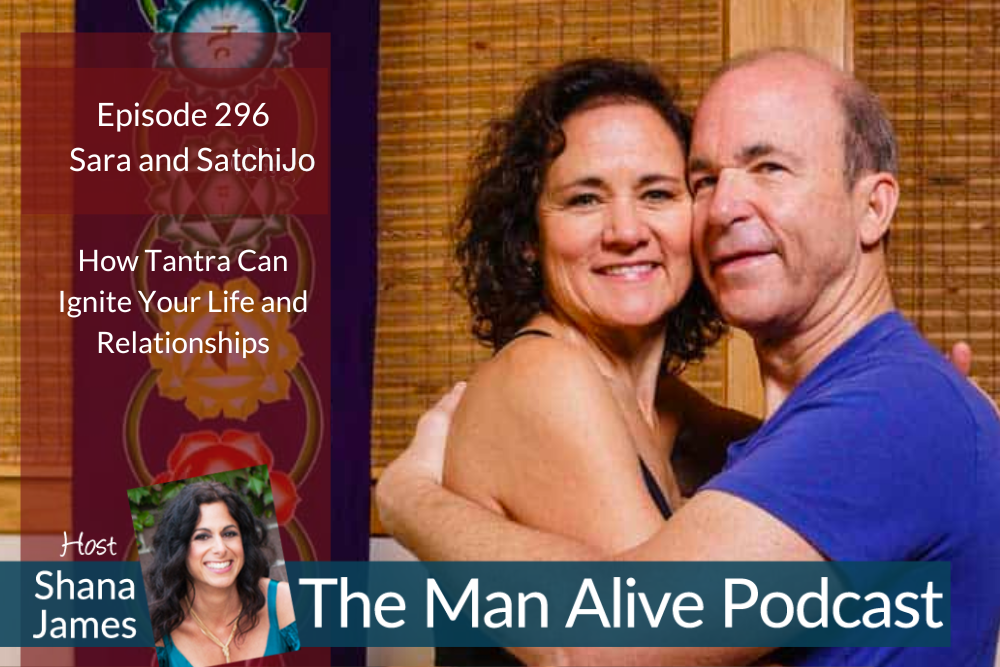
We were interviewed by Shana James on the Man Alive podcast, where we discussed Tantra, and the incredible ways it can bring more aliveness, pleasure and intimacy to your life and love life.

The Man Alive podcast is a series of bold, raw and gritty conversations with experts on success, power, sex, love, and legacy. She works with men to find their unique power, confidence and clarity, so they stop settling in life and love.

Shana attended one of our Love Passionately weekend retreats and was excited to let more people know what we do.

In our featured episode we delve into:

  • What a Tantric dynamic is and what Tantra adds to relationships and one’s life
  • Conflict resolution and love making
  • How to create sacred space and use it for everything from decision making, confHow to make a NO as sexy as a YES
  • The anti-ecstatic conspiracy
  • Catching the stories and ideas we hold against each other in relationships
  • How to learn to receive more
You can listen to the interview on:
iTunes Spotify Google TuneIn  iHeart Radio 

Maintaining a long-term, loving, and satisfying sexual relationship is no easy feat. It requires attention and care. This newsletter delves into common pitfalls that disrupt loving connections.

Have you ever hesitated to try again because you felt like you couldn’t get it right? Or refrained from opening up to your partner because you felt unmet, unseen, or unheard?

These feelings often underlie a lack of desire or fulfillment in the bedroom, manifesting as contraction, fear, disempowerment, or defensiveness.

One approach Thomas and I have found helpful in navigating sexual difficulties is committing to no criticism in the bedroom. We prioritize building each other up and honoring the vulnerability required to express our seductive, playful, passionate selves in an intimate space.

Of course, this doesn’t mean ignoring discomfort or dislikes. It’s crucial to communicate desires and boundaries.

But how can we communicate in a way that doesn’t hinder our partner’s pleasure?

Many couples fear spoiling the mood by offering suggestions during sex. Our culture often perpetuates the belief that we should instinctively know what our partner wants. However, lovemaking is a collaborative act of co-creation, requiring open communication and flexibility to adapt to each moment’s nuances.

If you’ve never talked about your sex life, one way to begin is by discussing the experience afterward, sharing three things you enjoyed and asking your partner the same.

Approach feedback positively, focusing on what’s going well before suggesting adjustments. Instead of saying “I don’t like that,” offer guidance like, “I love that soft touch; now would you try stroking in a circular motion?”

Consider a case we’re currently working on: a man yearning to reconnect with his wife intimately after seven years of no more than hugs and kisses. Despite once having a satisfactory sex life, they drifted apart after having children. Now, he feels immense pressure, as any attempt at intimacy is met with criticism. How do you think this affects his desire for intimacy?

Similarly, another woman shared her experience of being pushed away and labeled “over-sexual” when initiating sex. Criticizing our partner’s desire can stifle passion and freedom, inhibiting pleasure.

Instead, let’s find something to affirm: “I love your desire; you look incredibly sexy right now. Unfortunately, I have a work meeting, so let’s plan for tomorrow.” Rather than making our partners wrong for their desires, celebrate them and suggest a better time.

Keep the flame alive with texts, notes, and flirting until you can be together.

You might believe that people should be able to handle criticism, but research by relationship expert John Gottman suggests otherwise. His findings indicate that the ratio of one negative remark to five positive comments and interactions predicts relationship happiness.

Have you ever noticed how, even in the absence of explicit criticism, we might perceive it in a pause, tone, or “that look?” We sometimes laugh at the absurdities of what we make up from our partner’s unsaid expressions. Ya gotta laugh.

Shame and self-judgment are often our worst enemies.

If we’re primed to expect criticism, we’ll find it, even in silence.

When we lead with love and acceptance, criticism has less bite for ourselves and for life.

As we navigate the complexities of intimacy, let’s remember the transformative power of love and understanding. By prioritizing open communication, celebrating desire, and fostering a supportive environment, we can cultivate deeper connections and enriching sexual experiences with our partners. Let’s embrace each moment with openness and compassion, knowing that in love, there is endless potential for growth and fulfillment.

Sending love,

Sara & Thomas (SatchiJo) Stout

We had the pleasure of being guests on the Super States: Practices of TRANCE-formation Podcast hosted by Joshua Peters.

In this episode, titled “Exploring Tantra for Personal Growth with Sara and Thomas Stout,” we delved into the transformative practices of Tantra and its profound potential for personal growth.

You can listen to the podcast episode here:


During our conversation with Joshua, we covered a range of topics that can offer valuable insights into Tantra and its benefits:

  • Understanding the essence of Tantra and its principles
  • Exploring SkyDancing Tantra and its unique approach
  • Discovering the three keys to ecstasy within Tantra
  • Unveiling the two fundamental tools of Tantra practice
  • Exploring how Tantra strengthens trust on multiple levels
  • Learning ways to initiate body-based practices for personal growth
  • Simple practices that invite more aliveness into your life
  • Exploring Tantra both individually and within the context of partnership
  • Guidance on determining if Tantra aligns with your personal journey

We believe this podcast episode serves as a valuable overview of Tantra for those curious about its potential.

Want to know a Super Hot Turn-On?
One of the hottest and most long-standing turn-ons – is being met.

The first time Thomas and I met each other, I felt that he was too intense. I lacked confidence and thought I would not stand up for what was important to me. Our balance was off.

The opposite, having a partner who was a pushover, was not satisfying either. Being with someone who was grounded in their truth and had enough backbone to stand up to me was a turn-on. 

With my growing confidence and force as a woman, I didn’t want to worry about overshadowing my partner or in any way, needing to stay small.

I wanted someone who could handle all of me, my crazy ideas, my full expression and passion, and expand and grow with me.

It wasn’t until five years after our original meeting, when our paths crossed again that I loved how Thomas “met me.” I could be big, strong, passionate, expressive, and he didn’t get small and crumble.

And, it’s hard to admit, but I appreciated that he didn’t put up with my shit, like when I was over-controlling (don’t tell him). Or when I undermined my potential.

He met me:
Emotionally:
• Lovingly supported me to express myself honestly, vulnerably, and accountably.
• When we began to sweat the small stuff, he’d lighten the mood. Or if I’d try to minimize something important, Thomas would kindly listen for the deeper truth.

Intellectually:
• Inspired new thoughts and continued personal growth.

Spirituality:
• Respectfully challenged me to believe in myself.
• Considered higher consciousness and the greater good.

Physically and sexually:
• Playfully wrestled with me, often ending in a passionate love fest.
• Sensitively moved us beyond mediocrity and kept us out of ruts.
• Reliably held me in his masculine power, allowing me to surrender into receptivity.

Being met balances power and surrender, yang and yin.

How do you like to be met?
Do you like slow, gentle caresses?
Or do you like to be ravished intensely and feel the strength of your lover?
And possibly a combination of softness and firmness turns you on.

Most of us need to feel met to feel passion. We want to feel our partner responds to our level of intensity and challenges us.

After 35 years together, I still love feeling the strength of Thomas’ body against me, his grip that matches my heat.

From Thomas’ side, he says,
“When I start to go down a rabbit hole, Sara listens to my struggle but doesn’t go down with me.

When we feel secure in our relationship, we have more intense play. She may not go skydiving with me, but she’s there as a support, watching and cheering me on.”

How are you meeting yourself?

Are you communicating your range of needs in your life?

As we reflect upon our recent weekend retreat, The Art of Loving: An Introduction to SkyDancing Tantra, we are deeply moved by the authenticity that permeated our time together. It warms our hearts to know that our students appreciated our commitment to authenticity. We didn’t expect that acknowledgment since it’s just who we are – a value that lies at the core of our shared journey.

Authenticity is the art of living without masks or pretenses, allowing our true selves to shine forth in all our rawness and vulnerability. It’s about embracing our humanness—the messy, imperfect, and beautifully flawed aspects of who we are—and finding beauty and strength in our authenticity.

Throughout our retreat and beyond, we’ve witnessed the transformative power of authenticity.

It’s in the moments of shared laughter and tears, the honest conversations that flow from the depths of our souls, and the genuine connections that form when we show up as our true selves.

In a world that often prizes perfection and conformity, authenticity is a radical act of self-love and self-acceptance. It’s about owning our stories, embracing our uniqueness, and finding liberation in our truth.

Authenticity is not about being unfiltered and rude.

Self-expression without sensitivity of impact is reactive and unaligned with your soul’s truth.

Authenticity isn’t always easy. It requires courage to show up as we are, even when it feels uncomfortable or vulnerable. But in embracing our authenticity, we create space for deeper connections, meaningful experiences, and profound growth.

“I wasn’t sure what to expect, but I found so much freedom, space, expansion, love, and acceptance, which allowed me to expand my love with myself and my partner. Thank you.“   Marc

Let’s welcome authenticity as the norm, inviting voices and expressions of our uniqueness.

It begins with each of us welcoming our contrary and unexpressed selves to be present. In this moment, the question that we inquire – What is my authentic self now?