Monday, we celebrate our 35th wedding anniversary.

And after 35 years, apparently, we’re still learning how to love each other.

We just returned from five fabulous days in the Boundary Waters Canoe Area in northern Minnesota with our youngest son and his new girlfriend.

The Boundary Waters has always been a special place for us. There is something about the call of the loons, the smell of the pines, slipping into the cool lake first thing in the morning, and then warming ourselves on the big flat rocks in the sun. The beauty and majesty of this place touches something deep in me. Nowhere do I feel more connected to Spirit.

Thomas and I also have a long history there. We met in the Boundary Waters more than 40 years ago.

Watching our son and his girlfriend together brought back memories of that New Relationship Energy (NRE)—the excitement, the lightness, and all the discovery of getting to know someone new.

Thirty-five years of marriage brings something different: history, familiarity, deep trust, knowing each other’s quirks—and plenty of opportunities to keep growing.

Including how to stack firewood.

At one point during our trip, I corrected the way Thomas was stacking the wood. It was a small thing. But later, he told me that he felt as though what I wanted done was more important than how I was treating him.

Ouch.

Then I heard our son being wonderfully helpful to his girlfriend—offering instructions and suggestions. And then a few more suggestions. I could hear it beginning to teeter toward overcorrecting.

Ugh. It was pretty clear where he learned that.

I’ve been thinking about this ever since.

What is more important: getting something done the way I think it should be done, or making sure the person I love knows how much I value them?

Of course, there are times to speak up, make requests, disagree, and offer another way. But I’m paying closer attention to the weight of my words, my tone, and whether being “right” inadvertently communicates that the task matters more than Thomas does.

I want appreciation to be louder than correction.

Longevity isn’t a guarantee of happiness. Thirty-five years together doesn’t mean we’ve mastered relationship.

What we have gained is a deep foundation of respect, familiarity, and trust—and a commitment to keep finding our way back to love.

The excitement of NRE changes. Something else can grow in its place: the intimacy of knowing someone deeply and still being curious about them. The humility to recognize our patterns. The willingness to apologize, learn, laugh at ourselves, and choose each other again.

Perhaps that is part of the art of loving.

The Art of Loving

The timing feels especially meaningful because this Friday we begin our final LovePassionately weekend retreat of the year: The Art of Loving: An Introduction to SkyDancing Tantra.

About 15 years ago, around our 20th anniversary, Thomas and I attended a similar introductory SkyDancing Tantra workshop. We couldn’t have known where that weekend would lead us.

It became the beginning of an extraordinary new chapter in our relationship—and eventually brought us here, sharing this work with others.

The Art of Loving explores much more than romantic love. It’s an opportunity to deepen intimate communication, listen to the wisdom of the body, open the heart, explore sacredness and vitality, and discover new ways of giving and receiving love.

Whether you’re solo or partnered, the practice begins with you.

Because after 35 years, we’re increasingly convinced that loving well isn’t something we finally accomplish.

It’s something we keep practicing.

With love,

Sara & SatchiJo

We just returned from facilitating Touching Desire: The Art of Pleasure, where some participants were dipping their toes into Tantra for the first time, while others had explored Tantra before and were excited to finally experience SkyDancing Tantra.

Even when people arrive trying to manage their expectations, it’s wonderful to watch them soften into the comfort of the group—and then light up as the experience surpasses what they imagined.

“Every couple and single should try a similar workshop at least once. It expands life’s perception.”
— Vladimir V.

In the realm of personal growth, it’s often how we meet the edges of our comfort zone that makes the difference.

And this weekend, we saw a particular edge come up again and again:

What do I actually want?

When Desire Isn’t So Simple

One of the central explorations in Touching Desire is developing awareness of our desires and learning to ask for what we want.

That sounds simple.

It isn’t.

As participants explored giving and receiving, the questions became much bigger than touch:

What do I want?
Am I allowed to want it?
Do I deserve to receive it?
Can I ask, knowing the answer might be no?

Many of us simply haven’t had much practice.

From a young age, so many choices are made for us—what to eat, what to wear, how to behave, when to speak, and how we may or may not be touched.

Of course, children need structure and guidance. But there is a difference between saying no to a request and making the desire itself wrong.

Imagine a child asking for something that isn’t possible right now. Instead of, “No, we can’t do that,” we might respond:

“That sounds wonderful. We can’t do it today. Let’s find another time.”

The desire has been heard, even though the answer wasn’t yes.

What My Mother Taught Me About Desire

My mother taught me a simple version of this years ago.

When someone asks you for something, she said, don’t lead with what you can’t do. Tell them what you can do.

Instead of:

“No, I can’t get together Thursday.”

Try:

“I’d love to see you. Would Friday or Monday work?”

I’ve always appreciated the difference.

One closes a door. The other stays connected to the desire and looks for possibility.

Desire and Deserving

The Art of Pleasure is a dance between desire and receiving.

Between those two are communication, boundaries, choice—and something even more personal:

Do I believe I deserve to ask?

In Tantra, desire doesn’t have to be something we suppress, judge, or apologize for.

And celebrating a desire doesn’t mean it has to be fulfilled.

Desire gives us information.

It can show us what brings greater vitality, connection, pleasure, creativity, and aliveness. When we become more aware of our desires, we also become more capable of making conscious choices about them.


“Tantra can help you find things about yourself that you didn’t realize were even available.”

— Andrea

Perhaps that’s one of the gifts of exploring our desires: discovering possibilities within ourselves that we didn’t know were there.

Finding Your Voice

We are grateful for the people who were willing to meet those edges with us this weekend.

For some, growth meant recognizing what they wanted.

For others, it was finding the courage to say it aloud.

For another, it might have been receiving without immediately worrying about the other person.

And sometimes the growth was simply recognizing:

My desires matter. My boundaries matter. My pleasure matters. My voice matters.

That doesn’t mean we always get what we want.

It means we can listen to ourselves with enough love and respect to discover what is true—and then bring that awareness into relationship with another person.

That is where desire becomes much more than wanting.

It becomes part of knowing ourselves.

So here’s an exploration for you:

What do you want more of in your life?

More tenderness?
More adventure?
More rest?
More pleasure?
More honesty?
More connection?
More time to yourself?

Notice what happens in your body when you ask.

Before deciding whether it’s practical, appropriate, affordable, or possible, see if you can simply let yourself want.

Listen.

Your desire doesn’t have to become a demand or even an action.

For this moment, perhaps it can simply be heard.

Continue the Exploration

Wherever your exploration takes you, perhaps it begins with one question:

What do I really want—and am I willing to listen to the answer?

❤️ Sara & Thomas

We’ve just returned from Bali after 11 extraordinary days with Margot Anand, founder of SkyDancing Tantra®, and the international SkyDancing community.

There were purification rituals beneath waterfalls, temple ceremonies, beautiful gardens, snorkeling through reefs filled with vibrant fish, laughter with old friends, and long conversations about life, love, awareness, and awakening.

Many times during the trip we thought, “We should write about this.”

And yet… we didn’t.

Projects paused. Emails were answered more slowly. Devices stayed tucked away more than usual.

Listening to our bodies, we simply couldn’t get ourselves to do anything that took us out of the experience.

Again and again, our bodies moved us toward rest, connection, friendship, beauty, slowness, and presence.

At first, part of us felt guilty about that. We are responsible people. We care deeply about our community and work. We like being responsive.

But there was another truth emerging underneath the guilt.

Behind every “no” was a deeper “yes.”

A yes to what nourishes us.
A yes to what restores us.
A yes to beauty.
A yes to connection.
A yes to being fully alive in the moment we were actually living.

So often, we override the body.

The mind says:
“Be productive.”“Answer faster.”
“Push through.”
“Don’t disappoint anyone.”
“Keep going.”

Meanwhile, the body whispers:
“Slow down.”
“Stay with this moment.”
“Take in this sunset.”
“Be with your friends.”
“Breathe.”

In Tantra, learning to listen to the body is not indulgence — it is awareness.

The body constantly informs us how we are. It reveals tension, exhaustion, openness, fear, joy, contraction, and aliveness long before the mind catches up.

But many of us have become trained to mistrust these signals. We push past fatigue. We override discomfort. We numb ourselves with distraction, stimulation, scrolling, busyness, food, or endless doing.

Sometimes we even lose touch with what we genuinely want.

One of the profound teachings of SkyDancing Tantra is that awareness begins by listening.

Not only to our thoughts — but to our sensations, breath, energy, and deeper impulses.

When we pause long enough to listen honestly, we may discover that the “no” we fear disappointing others with is actually protecting something sacred.

A “no” to overextending ourselves may be a “yes” to health.

A “no” to constant productivity may be a “yes” to creativity.

A “no” to distraction may be a “yes” to intimacy.

A “no” to rushing may be a “yes” to actually experiencing our lives.

This doesn’t mean avoiding responsibility or acting without care. True listening includes discernment and compassion. But it does mean becoming more honest about what genuinely supports our nervous systems, relationships, and well-being.

Bali reminded us how healing it is to fully arrive in the present moment.

To savor a meal instead of multitasking through it.

To feel water on the skin.
To laugh deeply with friends.To watch a sunset without immediately reaching for a phone.To sit quietly beside someone you love.

These moments are not separate from intimacy.

They are intimacy.

And perhaps this is one of the deepest forms of Tantra:
Not escaping life, but learning how to fully inhabit it.

Two days after Christmas, and we’re writing to you from India—full of spices, adventure, and the quieter kind of joy that comes from letting go of being right. (Well… mostly.)

This season has us reflecting on the gifts we give in relationships. Not just scarves and gadgets—but the deeper ones. The ones that require a bit more humility and heart.

For example:
This Christmas, we gave each other the rarest gift of all—admitting the other was right.

Sara’s gift to Thomas:
“I’m so glad you hired a guide for the Taj Mahal.”
Sure, we could’ve read about it online like half the internet said. But Ricky—our guide—knew the history, the shortcuts to avoid the crowds, and the exact spot for the perfect photo (see below). We learned so much more, and even got to be present instead of buried in our phones.

Thomas’s gift to Sara:
“You were right about the portable charger.”
He was sure we didn’t need it. Until, standing outside the pick-up point with a nearly-dead phone and no driver in sight… well, you get the idea. We plugged in, we powered up, and we got home with ease. Small charger, big save.

These may seem simple, but they reflect something deeper. Tantra teaches us that conscious relationships thrive when we drop the ego, soften attachment to being right, and trust one another’s instincts.

It takes trust to follow your partner’s request, even when it’s not your preference.
(That doesn’t mean we went so far as to admit we were wrong. Let’s not get wild. )

Whether it’s choosing a guide or bringing a charger, these moments are practices in presence, flexibility, and shared growth. It’s not about compromising your truth—it’s about expanding the space for both truths to exist.

We spent Christmas Day wandering the Taj Mahal, savoring beauty, laughter, and a rooftop dinner under the stars. It reminded us of when we were dating—how easy it felt to say yes to each other’s suggestions. How simple love can feel when we relax into it.

This year was different for another reason. With Sara’s mother’s passing in August, this was her first Christmas without her. For over 60 years, she spent every Christmas Day with her. And now, with that chapter complete, being in Minnesota didn’t hold the same pull. So instead, we gifted ourselves something new: a return to the SkyDancing Tantra roots.

We came to India to strengthen our practice at the Osho International Meditation Resort, to study where the teachings of SkyDancing Tantra found fertile ground, and to continue our personal and spiritual unfolding. Because the greatest gift we can bring to our relationship—and to you—is our own growth.


💫 Ready to Welcome the New Year with More Presence, Pleasure, and Play?

Whether you’re solo or partnered, the practices of Tantra invite us to listen deeply, love more freely, and honor the sacred in everyday life.

As we move into the new year, we invite you to stay connected with us—through your breath, your body, your relationships, and this community.

✨ May this season be one of truth, tenderness, and trust.

With devotion,
Sara & Thomas
LovePassionately: School of Mindful Intimacy

Have you ever found yourself dumbstruck by how your words or actions affect someone else?

In the spirit of Tantric Awareness, we recognize that our intentions and the impact they have on others don’t always align. While we may act from a place of care, the way our words or actions are received is shaped by the other person’s experiences, emotions, and interpretations.

You meant well—you were trying to be helpful, supportive, or kind—but the other person experienced it differently. Maybe you’ve heard, “You’re taking it the wrong way!” or “That’s not what I meant at all!”

The good news? Every interaction is an opportunity for deeper understanding and growth. While our intentions come from a place of care, the way our words or actions are received is shaped by the other person’s experiences, emotions, and perspectives. With a little awareness and adjustment, we can bridge the gap and create more fulfilling connections.

When Help Feels Like Love

Maybe you can relate to our scenario. We’re in the car, and I notice Thomas hasn’t changed into the right lane to make a turn. Wanting to help, I gently remind him, “Hey, you’ll need to get over soon.” Instead of appreciation, he says, “I know! I was about to do it.” My intention? To be helpful. The impact? He feels micromanaged. That I don’t trust him.

Or maybe you’ve had a similar experience—like thoughtfully moving wet clothes from the washer to the dryer to help out, only to find out later that you accidentally shrank their favorite sweater. Your intention? Thoughtfulness. The impact? Frustration.

These small moments happen all the time in relationships. A kind gesture, a word of advice, or a well-intended action can sometimes be received differently than we expect. But moments like these don’t have to cause tension. With a little humor and openness, we can learn to navigate them with grace, turning potential frustration into connection.

Turning Misunderstandings Into Opportunities

Think of a baseball pitcher aiming for a strike. That’s their intention. But if they miscalculate and the ball hits the batter, does the batter’s pain disappear just because the pitcher didn’t mean to hit them? Of course not!

But here’s the powerful shift: acknowledging the impact allows us to create healing and connection. Instead of saying, “I didn’t mean to hit you, so it shouldn’t hurt,” we can say, “I’m so sorry—I see that hurt you.”

In relationships, too, we can embrace this mindset, taking responsibility for impact while also staying compassionate with ourselves and each other.

How to Bridge the Gap Between Intention and Impact

Mindful awareness invites us to acknowledge impact without judgment. It means we care enough to listen, learn, and adjust. Here are a few steps to help navigate these moments:

  • Listen Closely to Their Experience: Instead of jumping to defend yourself, take a deep breath and genuinely listen. Their feelings are valid whether or not they match your intent.
  • Acknowledge Their Feelings: A simple phrase like “I hear that you feel unheard by what I said” can make all the difference. Repeating back their words, verbatim if needed, ensures clarity.
  • Validate Their Perspective: Even if you don’t fully understand their reaction, try to empathize. “I can see why that felt that way to you” fosters connection rather than conflict.
  • Thank Them for Sharing: It takes courage to express when something doesn’t land well. Appreciating their honesty keeps the lines of communication open.
  • Consider Adjusting Your Approach: Ask yourself, Is there something I can shift to align my impact with my intent? Not every moment requires a behavioral change, but if a pattern emerges, small adjustments can make a huge difference.

The Foundation of Trust in Relationships

One of the guiding principles in our 35-year relationship is this: we don’t intentionally hurt each other. That means no name-calling, no physical or emotional aggression, no dishonesty or undermining.

Even in moments of misunderstanding, we trust in each other’s good intentions.

At the heart of it all, love is the underlying intention. Even in moments of misunderstanding, returning to this truth can help us navigate the dissonance between what we meant and how it was received. Love creates the space where trust can deepen, impact can be understood, and relationships can grow stronger.

Questions to Reflect On:

Can you think of a time when your intention didn’t match your impact?

How did you handle it, and what might you do differently next time?

Let’s keep the conversation going—what are your experiences with intention vs. impact? Have you found strategies that help bridge this gap in your relationships?

Through Tantric awareness, we can develop skills that enhance communication, deepen trust, and create more fulfilling connections.


Sara & Thomas

Are you feeling bored and looking for that next high?

Would you like to shift from seeking to feeling fulfillment?

We live in a culture of desiring more and more. We’re encouraged to seek happiness in new relationships, exciting careers, fresh adventures, and material possessions. Esther Perel speaks to this modern phenomenon: where once we left jobs or relationships because we were unhappy, now we leave because we believe we could be happier.

But here’s the twist: the ecstasy you’re searching for isn’t hiding in external changes. As Margot Anand beautifully puts it:

“Ecstasy is already within you. You need not look for it outside.”

The truth is, living ecstatically isn’t about chasing adrenaline highs or peak experiences—it’s about awakening to the richness of what’s already here.

You may have heard that before. I had for years, and now I live it, knowing that at any moment, I can feel ecstatic. I can choose the way I feel and not need my environment to make me happy.

Why Routine Feels Anti-Ecstatic

Routines are the backbone of security, but they can stifle our creativity and desire. In relationships especially, routine can dull the spark, making life feel predictable and monotonous.

Variety, or the allure of “newness,” stirs our senses and awakens eros—the life force that fuels passion and vitality.

But before you rush to change everything, consider this:

What if newness doesn’t require leaving, changing, or escaping? What if it’s a shift in perception?

Here is an invitation to explore how this works.

Cultivate Newness: Rediscover the Moment

When was the last time you truly joined a moment with fresh eyes?

Imagine watching a movie you’ve seen before. One approach is to anticipate each scene, disengaged and half-bored. Another is to dive in, noticing subtle layers you missed before. Relationships, routines, and everyday life are no different.

“Life has limitless layers. The art is to live the exact moment a thousand times and see it as a unique experience.”

Here’s a practice to try:

Join Each Moment Exercise

  1. Pick an object in your home—a chair, a mug, or a plant.
  2. Pretend you’re seeing it for the first time.
  3. Observe its color, texture, and how light dances on its surface.
  4. Ask yourself: What’s new here?

When we bring this beginner’s mind to relationships and life, newness becomes abundant.

The Science of Newness

Did you know that novelty stimulates dopamine, the brain chemical linked to pleasure and motivation? This isn’t about chasing the new—it’s about breaking mental patterns that keep us stuck in autopilot.

Example: Think of a song you adore. You could listen to it a thousand times and still feel its magic. Why? Because your presence keeps it alive.

J.O.Y. – Join, Open, Yield

Living ecstatically invites us to:

  1. Join each moment: Let go of what you think you know.
  2. Open to the unexpected: Curiosity fuels connection.
  3. Yield to what’s here: Surrender the need for “better” and savor the now.

An Invitation to Awaken

Ecstasy doesn’t mean life is perfect—it means life is alive. You don’t need a new job, a different partner, or a bigger house to feel it. You need only to embrace this truth:

“You will never again be here. Every moment holds the promise of birth and death—a once-in-a-lifetime experience if we allow it.”

So, how will you meet this moment?

We invite you to watch our recent free masterclass:

>>>The Art of Ecstasy: 3 Steps to Transcend Routine

Move from mundane routines to a life rich with wonder, presence, and fulfillment.

Have you ever had one of those moments where you thought, “Oh no, did I really just do that?”

I’ve had many, and – well, I had one of those this past weekend. It all started during a magical Tantra workshop Thomas and I were facilitating: Awakening Passion: Trust, Play & Love.

Everything was flowing beautifully—the students were connecting, exploring boundaries, and sharing heart-opening moments. We were on a roll! But then… I had a 30-second slap-in-the-face moment, and no, it wasn’t from Thomas.

Let me explain.

The 30-Second Slap

During our closing circle, everyone had limited time to share their final thoughts. Thomas, being the loving and supportive husband that he is, joked to the group that he’s learned never to time his wife. Everyone laughed, including me. He started speaking—acknowledging the courageous students and the very helpful assistants. Then, I felt it.

That familiar urge to nudge him along crept in. So, I did our secret “move it along” cue: I tapped his heel with my foot. You know, the subtle partner code.

But Thomas calmly said, “You don’t need to tap my heel,” and continued speaking.

It was like being slapped in the face with a truth bomb. How dare he call me out in front of the group?

I felt a wave of rage, immediately followed by embarrassment. Did they notice my face flush? This time, it wasn’t from his adoring words but from sheer discomfort.

Blame is a prison in which you no longer hold the keys to freedom.

The Real Slap: My Own Wake-Up Call

Then it hit me—harder than any slap ever could: I timed him. The very thing he had just joked about not doing to me, I did to him. The slap wasn’t from Thomas—it was from me; wake up, Sara!

I was rattled. Here I was, sitting in my own mess of emotions while Thomas continued singing my praises in front of the group. I could barely hear what he was saying because I felt so much shame and guilt.

And then, as if in slow motion, I started to soften. I saw in his face that even though I totally messed up, he still loved me. He wasn’t angry. He was still standing in his love. I could feel how much he cared, even if my foot tap had momentarily rattled us both.

Can I meet him in that place of love, instead of getting stuck in my own drama?

Based on my first reaction, I’m so glad I didn’t fire a dagger at Thomas. I’ve learned to contain my flash of anger, knowing there is something else under there.

I met him there, in that love, and did my best to let it in.

Looking back, I wish I’d had the presence to handle that moment differently.

What if I’d paused and apologized for stepping on his time? What if I had been more open and honest about what I was feeling?

That opportunity to apologize came later. We definitely needed to talk this through.

The Long Ride Home: Argument #17

Now, if you think we quickly made up, hugged, and were fine. Yes we hugged and — no. This is real life.

On our way home, we both felt the weight of a few unspoken tensions, those small moments that add up over time. It sounded like playing an old recording of Argument #17—the one about “feeling interrupted” and “you’re always telling me what to do.” We’ve been here before.

But this time, instead of just replaying our past arguments, we got curious. What was really under this? Why do these little things set us off?

When we take responsibility for our feelings, hurt, and shame, the path out gets clearer.

Underneath It All: What Was Helpful Isn’t Anymore

When we first started teaching together, I felt relief when Thomas chimed in to offer clarity if my guidance sounded confusing. Now, I feel like he interrupts me, taking it over as his.

Meanwhile, Thomas used to appreciate it when I planned our events and organized the schedule (can you see where this is going?). Now, he feels like I’m bossing him around or being critical. Fancy that!

We both had to admit—it’s a challenge, but we’re committed to trying to stop this pattern. We made peace with the fact that we’ll probably have Argument #17 again at some point, but hopefully, we’ll keep it shorter next time. And maybe we’ll get back to love just a little quicker.

Relationships are the crucible for growth. Often, my triggers trigger my partner. Thomas describes it well: “It’s an opportunity to alchemize a new pathway.” If only we could remember that when we were in the fire.

The Art of Returning to Love

Love is a practice, and unearthing love after a misunderstanding? That’s an art form. It takes trust, a sense of humor, and a whole lot of vulnerability. It takes recognizing that beneath the surface squabbles, we don’t mean to hurt each other, there is a foundation of love holding us. These moments are opportunities to grow closer.

In the end, all the little issues between us are nothing compared to the love we share. As the weekend workshop so beautifully emphasized, Awakening Passion is about trust, play, and love. And sometimes, it’s about messing up, owning it, and moving forward together.

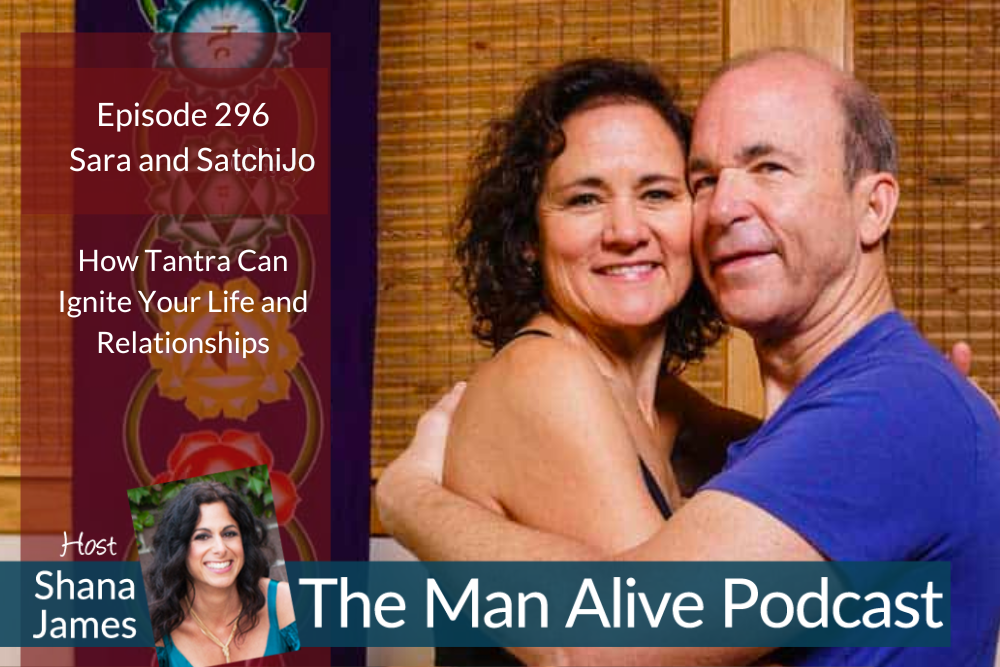
We were interviewed by Shana James on the Man Alive podcast, where we discussed Tantra, and the incredible ways it can bring more aliveness, pleasure and intimacy to your life and love life.

The Man Alive podcast is a series of bold, raw and gritty conversations with experts on success, power, sex, love, and legacy. She works with men to find their unique power, confidence and clarity, so they stop settling in life and love.

Shana attended one of our Love Passionately weekend retreats and was excited to let more people know what we do.

In our featured episode we delve into:

  • What a Tantric dynamic is and what Tantra adds to relationships and one’s life
  • Conflict resolution and love making
  • How to create sacred space and use it for everything from decision making, confHow to make a NO as sexy as a YES
  • The anti-ecstatic conspiracy
  • Catching the stories and ideas we hold against each other in relationships
  • How to learn to receive more
You can listen to the interview on:
iTunes Spotify Google TuneIn  iHeart Radio 

Maintaining a long-term, loving, and satisfying sexual relationship is no easy feat. It requires attention and care. This newsletter delves into common pitfalls that disrupt loving connections.

Have you ever hesitated to try again because you felt like you couldn’t get it right? Or refrained from opening up to your partner because you felt unmet, unseen, or unheard?

These feelings often underlie a lack of desire or fulfillment in the bedroom, manifesting as contraction, fear, disempowerment, or defensiveness.

One approach Thomas and I have found helpful in navigating sexual difficulties is committing to no criticism in the bedroom. We prioritize building each other up and honoring the vulnerability required to express our seductive, playful, passionate selves in an intimate space.

Of course, this doesn’t mean ignoring discomfort or dislikes. It’s crucial to communicate desires and boundaries.

But how can we communicate in a way that doesn’t hinder our partner’s pleasure?

Many couples fear spoiling the mood by offering suggestions during sex. Our culture often perpetuates the belief that we should instinctively know what our partner wants. However, lovemaking is a collaborative act of co-creation, requiring open communication and flexibility to adapt to each moment’s nuances.

If you’ve never talked about your sex life, one way to begin is by discussing the experience afterward, sharing three things you enjoyed and asking your partner the same.

Approach feedback positively, focusing on what’s going well before suggesting adjustments. Instead of saying “I don’t like that,” offer guidance like, “I love that soft touch; now would you try stroking in a circular motion?”

Consider a case we’re currently working on: a man yearning to reconnect with his wife intimately after seven years of no more than hugs and kisses. Despite once having a satisfactory sex life, they drifted apart after having children. Now, he feels immense pressure, as any attempt at intimacy is met with criticism. How do you think this affects his desire for intimacy?

Similarly, another woman shared her experience of being pushed away and labeled “over-sexual” when initiating sex. Criticizing our partner’s desire can stifle passion and freedom, inhibiting pleasure.

Instead, let’s find something to affirm: “I love your desire; you look incredibly sexy right now. Unfortunately, I have a work meeting, so let’s plan for tomorrow.” Rather than making our partners wrong for their desires, celebrate them and suggest a better time.

Keep the flame alive with texts, notes, and flirting until you can be together.

You might believe that people should be able to handle criticism, but research by relationship expert John Gottman suggests otherwise. His findings indicate that the ratio of one negative remark to five positive comments and interactions predicts relationship happiness.

Have you ever noticed how, even in the absence of explicit criticism, we might perceive it in a pause, tone, or “that look?” We sometimes laugh at the absurdities of what we make up from our partner’s unsaid expressions. Ya gotta laugh.

Shame and self-judgment are often our worst enemies.

If we’re primed to expect criticism, we’ll find it, even in silence.

When we lead with love and acceptance, criticism has less bite for ourselves and for life.

As we navigate the complexities of intimacy, let’s remember the transformative power of love and understanding. By prioritizing open communication, celebrating desire, and fostering a supportive environment, we can cultivate deeper connections and enriching sexual experiences with our partners. Let’s embrace each moment with openness and compassion, knowing that in love, there is endless potential for growth and fulfillment.

Sending love,

Sara & Thomas (SatchiJo) Stout

We had the pleasure of being guests on the Super States: Practices of TRANCE-formation Podcast hosted by Joshua Peters.

In this episode, titled “Exploring Tantra for Personal Growth with Sara and Thomas Stout,” we delved into the transformative practices of Tantra and its profound potential for personal growth.

You can listen to the podcast episode here:


During our conversation with Joshua, we covered a range of topics that can offer valuable insights into Tantra and its benefits:

  • Understanding the essence of Tantra and its principles
  • Exploring SkyDancing Tantra and its unique approach
  • Discovering the three keys to ecstasy within Tantra
  • Unveiling the two fundamental tools of Tantra practice
  • Exploring how Tantra strengthens trust on multiple levels
  • Learning ways to initiate body-based practices for personal growth
  • Simple practices that invite more aliveness into your life
  • Exploring Tantra both individually and within the context of partnership
  • Guidance on determining if Tantra aligns with your personal journey

We believe this podcast episode serves as a valuable overview of Tantra for those curious about its potential.