We just returned from facilitating Touching Desire: The Art of Pleasure, where some participants were dipping their toes into Tantra for the first time, while others had explored Tantra before and were excited to finally experience SkyDancing Tantra.

Even when people arrive trying to manage their expectations, it’s wonderful to watch them soften into the comfort of the group—and then light up as the experience surpasses what they imagined.

“Every couple and single should try a similar workshop at least once. It expands life’s perception.”
— Vladimir V.

In the realm of personal growth, it’s often how we meet the edges of our comfort zone that makes the difference.

And this weekend, we saw a particular edge come up again and again:

What do I actually want?

When Desire Isn’t So Simple

One of the central explorations in Touching Desire is developing awareness of our desires and learning to ask for what we want.

That sounds simple.

It isn’t.

As participants explored giving and receiving, the questions became much bigger than touch:

What do I want?
Am I allowed to want it?
Do I deserve to receive it?
Can I ask, knowing the answer might be no?

Many of us simply haven’t had much practice.

From a young age, so many choices are made for us—what to eat, what to wear, how to behave, when to speak, and how we may or may not be touched.

Of course, children need structure and guidance. But there is a difference between saying no to a request and making the desire itself wrong.

Imagine a child asking for something that isn’t possible right now. Instead of, “No, we can’t do that,” we might respond:

“That sounds wonderful. We can’t do it today. Let’s find another time.”

The desire has been heard, even though the answer wasn’t yes.

What My Mother Taught Me About Desire

My mother taught me a simple version of this years ago.

When someone asks you for something, she said, don’t lead with what you can’t do. Tell them what you can do.

Instead of:

“No, I can’t get together Thursday.”

Try:

“I’d love to see you. Would Friday or Monday work?”

I’ve always appreciated the difference.

One closes a door. The other stays connected to the desire and looks for possibility.

Desire and Deserving

The Art of Pleasure is a dance between desire and receiving.

Between those two are communication, boundaries, choice—and something even more personal:

Do I believe I deserve to ask?

In Tantra, desire doesn’t have to be something we suppress, judge, or apologize for.

And celebrating a desire doesn’t mean it has to be fulfilled.

Desire gives us information.

It can show us what brings greater vitality, connection, pleasure, creativity, and aliveness. When we become more aware of our desires, we also become more capable of making conscious choices about them.

 

“Tantra can help you find things about yourself that you didn’t realize were even available.”

— Andrea

Perhaps that’s one of the gifts of exploring our desires: discovering possibilities within ourselves that we didn’t know were there.

Finding Your Voice

We are grateful for the people who were willing to meet those edges with us this weekend.

For some, growth meant recognizing what they wanted.

For others, it was finding the courage to say it aloud.

For another, it might have been receiving without immediately worrying about the other person.

And sometimes the growth was simply recognizing:

My desires matter. My boundaries matter. My pleasure matters. My voice matters.

That doesn’t mean we always get what we want.

It means we can listen to ourselves with enough love and respect to discover what is true—and then bring that awareness into relationship with another person.

That is where desire becomes much more than wanting.

It becomes part of knowing ourselves.

So here’s an exploration for you:

What do you want more of in your life?

More tenderness?
More adventure?
More rest?
More pleasure?
More honesty?
More connection?
More time to yourself?

Notice what happens in your body when you ask.

Before deciding whether it’s practical, appropriate, affordable, or possible, see if you can simply let yourself want.

Listen.

Your desire doesn’t have to become a demand or even an action.

For this moment, perhaps it can simply be heard.

Continue the Exploration

Wherever your exploration takes you, perhaps it begins with one question:

What do I really want—and am I willing to listen to the answer?

❤️ Sara & Thomas
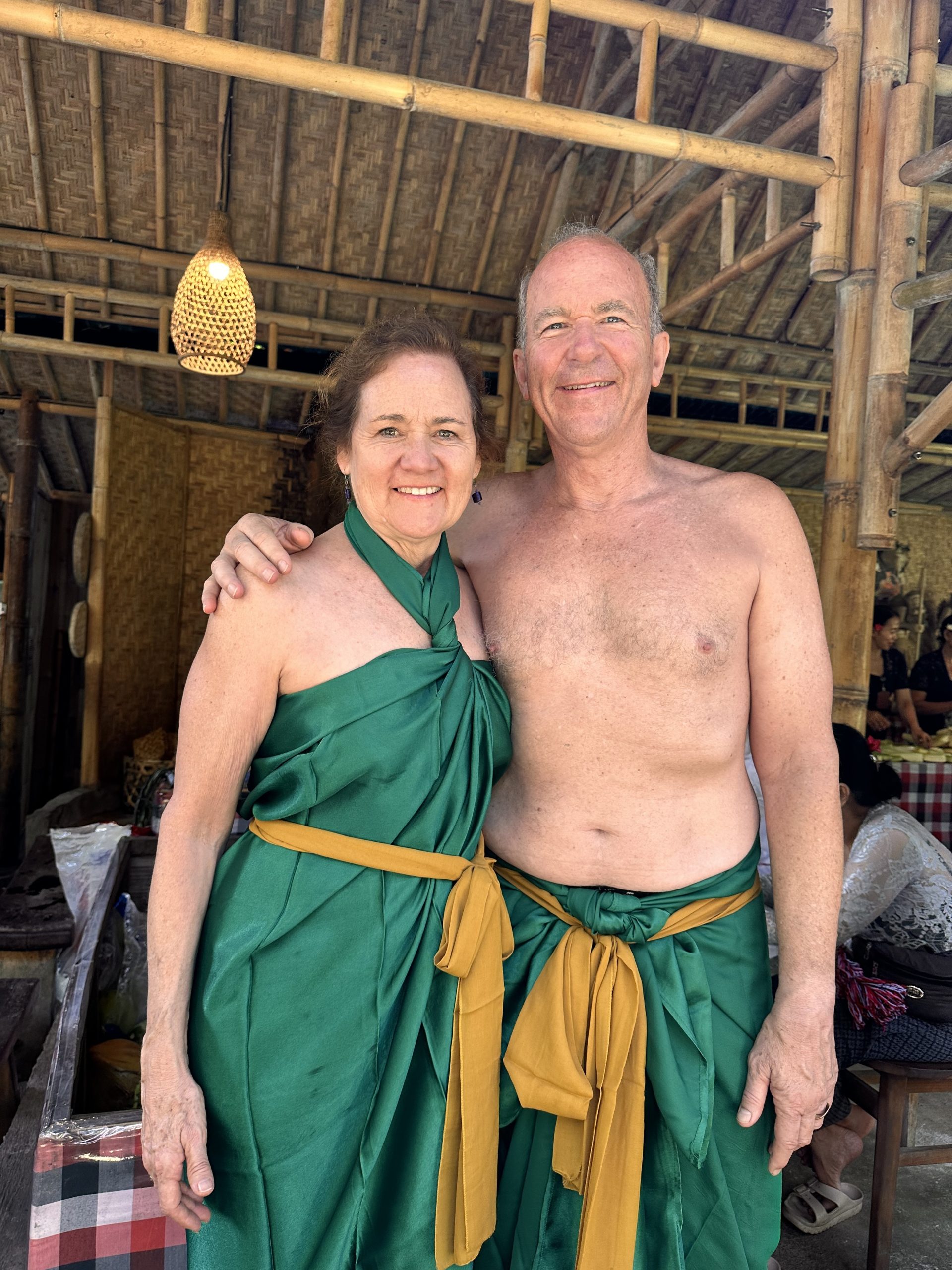
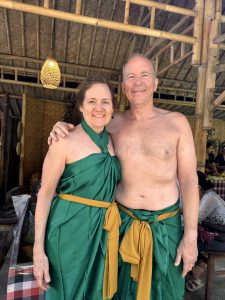
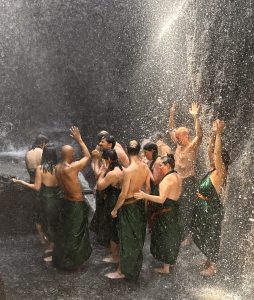
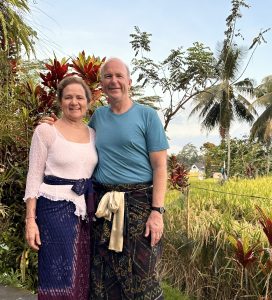
We’ve just returned from Bali after 11 extraordinary days with Margot Anand, founder of SkyDancing Tantra®, and the international SkyDancing community.

There were purification rituals beneath waterfalls, temple ceremonies, beautiful gardens, snorkeling through reefs filled with vibrant fish, laughter with old friends, and long conversations about life, love, awareness, and awakening.

Many times during the trip we thought, “We should write about this.”

And yet… we didn’t.

Projects paused. Emails were answered more slowly. Devices stayed tucked away more than usual.

Listening to our bodies, we simply couldn’t get ourselves to do anything that took us out of the experience.

Again and again, our bodies moved us toward rest, connection, friendship, beauty, slowness, and presence.

At first, part of us felt guilty about that. We are responsible people. We care deeply about our community and work. We like being responsive.

But there was another truth emerging underneath the guilt.

Behind every “no” was a deeper “yes.”

A yes to what nourishes us.
A yes to what restores us.
A yes to beauty.
A yes to connection.
A yes to being fully alive in the moment we were actually living.

So often, we override the body.

The mind says:
“Be productive.”“Answer faster.”
“Push through.”
“Don’t disappoint anyone.”
“Keep going.”

Meanwhile, the body whispers:
“Slow down.”
“Stay with this moment.”
“Take in this sunset.”
“Be with your friends.”
“Breathe.”

In Tantra, learning to listen to the body is not indulgence — it is awareness.

The body constantly informs us how we are. It reveals tension, exhaustion, openness, fear, joy, contraction, and aliveness long before the mind catches up.

But many of us have become trained to mistrust these signals. We push past fatigue. We override discomfort. We numb ourselves with distraction, stimulation, scrolling, busyness, food, or endless doing.

Sometimes we even lose touch with what we genuinely want.

One of the profound teachings of SkyDancing Tantra is that awareness begins by listening.

Not only to our thoughts — but to our sensations, breath, energy, and deeper impulses.

When we pause long enough to listen honestly, we may discover that the “no” we fear disappointing others with is actually protecting something sacred.

A “no” to overextending ourselves may be a “yes” to health.

A “no” to constant productivity may be a “yes” to creativity.

A “no” to distraction may be a “yes” to intimacy.

A “no” to rushing may be a “yes” to actually experiencing our lives.

This doesn’t mean avoiding responsibility or acting without care. True listening includes discernment and compassion. But it does mean becoming more honest about what genuinely supports our nervous systems, relationships, and well-being.

Bali reminded us how healing it is to fully arrive in the present moment.

To savor a meal instead of multitasking through it.

To feel water on the skin.
To laugh deeply with friends.To watch a sunset without immediately reaching for a phone.To sit quietly beside someone you love.

These moments are not separate from intimacy.

They are intimacy.

And perhaps this is one of the deepest forms of Tantra:
Not escaping life, but learning how to fully inhabit it.

Two days after Christmas, and we’re writing to you from India—full of spices, adventure, and the quieter kind of joy that comes from letting go of being right. (Well… mostly.)

This season has us reflecting on the gifts we give in relationships. Not just scarves and gadgets—but the deeper ones. The ones that require a bit more humility and heart.

For example:
This Christmas, we gave each other the rarest gift of all—admitting the other was right.

Sara’s gift to Thomas:
“I’m so glad you hired a guide for the Taj Mahal.”
Sure, we could’ve read about it online like half the internet said. But Ricky—our guide—knew the history, the shortcuts to avoid the crowds, and the exact spot for the perfect photo (see below). We learned so much more, and even got to be present instead of buried in our phones.

Thomas’s gift to Sara:
“You were right about the portable charger.”
He was sure we didn’t need it. Until, standing outside the pick-up point with a nearly-dead phone and no driver in sight… well, you get the idea. We plugged in, we powered up, and we got home with ease. Small charger, big save.

These may seem simple, but they reflect something deeper. Tantra teaches us that conscious relationships thrive when we drop the ego, soften attachment to being right, and trust one another’s instincts.

It takes trust to follow your partner’s request, even when it’s not your preference.
(That doesn’t mean we went so far as to admit we were wrong. Let’s not get wild. )

Whether it’s choosing a guide or bringing a charger, these moments are practices in presence, flexibility, and shared growth. It’s not about compromising your truth—it’s about expanding the space for both truths to exist.

We spent Christmas Day wandering the Taj Mahal, savoring beauty, laughter, and a rooftop dinner under the stars. It reminded us of when we were dating—how easy it felt to say yes to each other’s suggestions. How simple love can feel when we relax into it.

This year was different for another reason. With Sara’s mother’s passing in August, this was her first Christmas without her. For over 60 years, she spent every Christmas Day with her. And now, with that chapter complete, being in Minnesota didn’t hold the same pull. So instead, we gifted ourselves something new: a return to the SkyDancing Tantra roots.

We came to India to strengthen our practice at the Osho International Meditation Resort, to study where the teachings of SkyDancing Tantra found fertile ground, and to continue our personal and spiritual unfolding. Because the greatest gift we can bring to our relationship—and to you—is our own growth.


💫 Ready to Welcome the New Year with More Presence, Pleasure, and Play?

Whether you’re solo or partnered, the practices of Tantra invite us to listen deeply, love more freely, and honor the sacred in everyday life.

As we move into the new year, we invite you to stay connected with us—through your breath, your body, your relationships, and this community.

✨ May this season be one of truth, tenderness, and trust.

With devotion,
Sara & Thomas
LovePassionately: School of Mindful Intimacy

Are you feeling bored and looking for that next high?

Would you like to shift from seeking to feeling fulfillment?

We live in a culture of desiring more and more. We’re encouraged to seek happiness in new relationships, exciting careers, fresh adventures, and material possessions. Esther Perel speaks to this modern phenomenon: where once we left jobs or relationships because we were unhappy, now we leave because we believe we could be happier.

But here’s the twist: the ecstasy you’re searching for isn’t hiding in external changes. As Margot Anand beautifully puts it:

“Ecstasy is already within you. You need not look for it outside.”

The truth is, living ecstatically isn’t about chasing adrenaline highs or peak experiences—it’s about awakening to the richness of what’s already here.

You may have heard that before. I had for years, and now I live it, knowing that at any moment, I can feel ecstatic. I can choose the way I feel and not need my environment to make me happy.

Why Routine Feels Anti-Ecstatic

Routines are the backbone of security, but they can stifle our creativity and desire. In relationships especially, routine can dull the spark, making life feel predictable and monotonous.

Variety, or the allure of “newness,” stirs our senses and awakens eros—the life force that fuels passion and vitality.

But before you rush to change everything, consider this:

What if newness doesn’t require leaving, changing, or escaping? What if it’s a shift in perception?

Here is an invitation to explore how this works.

Cultivate Newness: Rediscover the Moment

When was the last time you truly joined a moment with fresh eyes?

Imagine watching a movie you’ve seen before. One approach is to anticipate each scene, disengaged and half-bored. Another is to dive in, noticing subtle layers you missed before. Relationships, routines, and everyday life are no different.

“Life has limitless layers. The art is to live the exact moment a thousand times and see it as a unique experience.”

Here’s a practice to try:

Join Each Moment Exercise

  1. Pick an object in your home—a chair, a mug, or a plant.
  2. Pretend you’re seeing it for the first time.
  3. Observe its color, texture, and how light dances on its surface.
  4. Ask yourself: What’s new here?

When we bring this beginner’s mind to relationships and life, newness becomes abundant.

The Science of Newness

Did you know that novelty stimulates dopamine, the brain chemical linked to pleasure and motivation? This isn’t about chasing the new—it’s about breaking mental patterns that keep us stuck in autopilot.

Example: Think of a song you adore. You could listen to it a thousand times and still feel its magic. Why? Because your presence keeps it alive.

J.O.Y. – Join, Open, Yield

Living ecstatically invites us to:

  1. Join each moment: Let go of what you think you know.
  2. Open to the unexpected: Curiosity fuels connection.
  3. Yield to what’s here: Surrender the need for “better” and savor the now.

An Invitation to Awaken

Ecstasy doesn’t mean life is perfect—it means life is alive. You don’t need a new job, a different partner, or a bigger house to feel it. You need only to embrace this truth:

“You will never again be here. Every moment holds the promise of birth and death—a once-in-a-lifetime experience if we allow it.”

So, how will you meet this moment?

We invite you to watch our recent free masterclass:

>>>The Art of Ecstasy: 3 Steps to Transcend Routine

Move from mundane routines to a life rich with wonder, presence, and fulfillment.

Have you ever had one of those moments where you thought, “Oh no, did I really just do that?”

I’ve had many, and – well, I had one of those this past weekend. It all started during a magical Tantra workshop Thomas and I were facilitating: Awakening Passion: Trust, Play & Love.

Everything was flowing beautifully—the students were connecting, exploring boundaries, and sharing heart-opening moments. We were on a roll! But then… I had a 30-second slap-in-the-face moment, and no, it wasn’t from Thomas.

Let me explain.

The 30-Second Slap

During our closing circle, everyone had limited time to share their final thoughts. Thomas, being the loving and supportive husband that he is, joked to the group that he’s learned never to time his wife. Everyone laughed, including me. He started speaking—acknowledging the courageous students and the very helpful assistants. Then, I felt it.

That familiar urge to nudge him along crept in. So, I did our secret “move it along” cue: I tapped his heel with my foot. You know, the subtle partner code.

But Thomas calmly said, “You don’t need to tap my heel,” and continued speaking.

It was like being slapped in the face with a truth bomb. How dare he call me out in front of the group?

I felt a wave of rage, immediately followed by embarrassment. Did they notice my face flush? This time, it wasn’t from his adoring words but from sheer discomfort.

Blame is a prison in which you no longer hold the keys to freedom.

The Real Slap: My Own Wake-Up Call

Then it hit me—harder than any slap ever could: I timed him. The very thing he had just joked about not doing to me, I did to him. The slap wasn’t from Thomas—it was from me; wake up, Sara!

I was rattled. Here I was, sitting in my own mess of emotions while Thomas continued singing my praises in front of the group. I could barely hear what he was saying because I felt so much shame and guilt.

And then, as if in slow motion, I started to soften. I saw in his face that even though I totally messed up, he still loved me. He wasn’t angry. He was still standing in his love. I could feel how much he cared, even if my foot tap had momentarily rattled us both.

Can I meet him in that place of love, instead of getting stuck in my own drama?

Based on my first reaction, I’m so glad I didn’t fire a dagger at Thomas. I’ve learned to contain my flash of anger, knowing there is something else under there.

I met him there, in that love, and did my best to let it in.

Looking back, I wish I’d had the presence to handle that moment differently.

What if I’d paused and apologized for stepping on his time? What if I had been more open and honest about what I was feeling?

That opportunity to apologize came later. We definitely needed to talk this through.

The Long Ride Home: Argument #17

Now, if you think we quickly made up, hugged, and were fine. Yes we hugged and — no. This is real life.

On our way home, we both felt the weight of a few unspoken tensions, those small moments that add up over time. It sounded like playing an old recording of Argument #17—the one about “feeling interrupted” and “you’re always telling me what to do.” We’ve been here before.

But this time, instead of just replaying our past arguments, we got curious. What was really under this? Why do these little things set us off?

When we take responsibility for our feelings, hurt, and shame, the path out gets clearer.

Underneath It All: What Was Helpful Isn’t Anymore

When we first started teaching together, I felt relief when Thomas chimed in to offer clarity if my guidance sounded confusing. Now, I feel like he interrupts me, taking it over as his.

Meanwhile, Thomas used to appreciate it when I planned our events and organized the schedule (can you see where this is going?). Now, he feels like I’m bossing him around or being critical. Fancy that!

We both had to admit—it’s a challenge, but we’re committed to trying to stop this pattern. We made peace with the fact that we’ll probably have Argument #17 again at some point, but hopefully, we’ll keep it shorter next time. And maybe we’ll get back to love just a little quicker.

Relationships are the crucible for growth. Often, my triggers trigger my partner. Thomas describes it well: “It’s an opportunity to alchemize a new pathway.” If only we could remember that when we were in the fire.

The Art of Returning to Love

Love is a practice, and unearthing love after a misunderstanding? That’s an art form. It takes trust, a sense of humor, and a whole lot of vulnerability. It takes recognizing that beneath the surface squabbles, we don’t mean to hurt each other, there is a foundation of love holding us. These moments are opportunities to grow closer.

In the end, all the little issues between us are nothing compared to the love we share. As the weekend workshop so beautifully emphasized, Awakening Passion is about trust, play, and love. And sometimes, it’s about messing up, owning it, and moving forward together.

We were interviewed by Shana James on the Man Alive podcast, where we discussed Tantra, and the incredible ways it can bring more aliveness, pleasure and intimacy to your life and love life.

The Man Alive podcast is a series of bold, raw and gritty conversations with experts on success, power, sex, love, and legacy. She works with men to find their unique power, confidence and clarity, so they stop settling in life and love.

Shana attended one of our Love Passionately weekend retreats and was excited to let more people know what we do.

In our featured episode we delve into:

  • What a Tantric dynamic is and what Tantra adds to relationships and one’s life
  • Conflict resolution and love making
  • How to create sacred space and use it for everything from decision making, confHow to make a NO as sexy as a YES
  • The anti-ecstatic conspiracy
  • Catching the stories and ideas we hold against each other in relationships
  • How to learn to receive more
You can listen to the interview on:
iTunes Spotify Google TuneIn  iHeart Radio 

We had the pleasure of being guests on the Super States: Practices of TRANCE-formation Podcast hosted by Joshua Peters.

In this episode, titled “Exploring Tantra for Personal Growth with Sara and Thomas Stout,” we delved into the transformative practices of Tantra and its profound potential for personal growth.

You can listen to the podcast episode here:


During our conversation with Joshua, we covered a range of topics that can offer valuable insights into Tantra and its benefits:

  • Understanding the essence of Tantra and its principles
  • Exploring SkyDancing Tantra and its unique approach
  • Discovering the three keys to ecstasy within Tantra
  • Unveiling the two fundamental tools of Tantra practice
  • Exploring how Tantra strengthens trust on multiple levels
  • Learning ways to initiate body-based practices for personal growth
  • Simple practices that invite more aliveness into your life
  • Exploring Tantra both individually and within the context of partnership
  • Guidance on determining if Tantra aligns with your personal journey

We believe this podcast episode serves as a valuable overview of Tantra for those curious about its potential.

What are you waiting for?

The right moment, a sign, a companion, enough money, free time, or to not feel nervous?

Waiting is one of the quickest paths to regret. 

During our recent conversation on our tandem bike (where we often appreciate our life and each other the most), I told Thomas that I feel no regrets with him. That is not an easy state to achieve together. It takes a lot of intention and coordination of multiple desires.

Of course, like any long-term relationship, there are still harsh tones and words I wish I hadn’t said or affections I wish I had expressed, but primarily, my hopes and dreams feel fulfilled. There are no looming unmet needs.

Living fully in the moment is an essential tool for a happy life. 

For many years, we could not have said we were living without regrets.

It was easier to focus on why I couldn’t do or have something rather than be living as much as possible. When I thought I was waiting for more money and more free time, what I was waiting for – was to trust life. I didn’t believe in abundance or that I deserved to receive what I wanted.

Tantra helped me listen to my desires and dreams and live in a state of trust and abundance. I could also access the feeling of joy and pleasure around me and within me throughout my day.

I wasn’t waiting for something outside myself to make me happy.

This week, as I recoat our wooden kitchen counter, I am struck by how much I enjoy the golden color and glistening grain. My fingers in the soil weeding the flower bed feels so nourishing. I pause and appreciate all the greens, yellows, and colorful leaves just budding.

We know it can feel like we’re waiting for our time to travel or do what we want when our children or work can be consuming. But even with a busy schedule, there are choices for fulfillment.

Thomas has been my best teacher for making time for pleasure. When we had little babies, I was up to my elbows in diapers and didn’t think I had time for myself, he persuaded me to take a night off each week to take an art class. Coming home happy and excited gave me energy for the rest of the week. And for him.

Having future dreams and intentions doesn’t mean you are waiting. It means focusing on what you have and trusting that joy will happen or can happen as it becomes more important than our current choices. Thomas wants to work less so he can bike and relax more. I’d love to have more time for writing and art.

Is it time to no longer wait?

Can the answer be Now?

I don’t want to get to the end of my life and not have lived. 

“The one that can not do something is not the real you.”

~ Margot Anand


Carpe diem ~ Seize the moment.

By Sara Stout

In most Tantra programs, there are opportunities for pleasure, fun, community, and personal growth.

What makes SkyDancing® Tantra stand out?

SkyDancing Tantra supports higher, conscious living from which a sense of freedom and full self-expression flourishes. Some Tantra schools have a reputation for wildness and hedonistic activities. Others are meditative and dismiss the body. SkyDancing supports the body and consciousness. Freedom without consciousness can lead to harmful choices. When one develops tools of awareness beyond the mind, they are less likely to compromise their boundaries but instead, stay on their truly aligned path and find their grounded freedom and ecstasy.

People love Margot Anand and her books. Margot is world-renowned author and teacher who brought Tantra to the west and has made it accessible to everyone through her step-by-step methods. It’s a gift to receive Margot’s transmissions through SkyDancing teachers.

SkyDancing Tantra is a well-established Institute, supporting students for over 32 years. It teaches ancient Tantric practices and incorporates modern-day cultural and psychological considerations.

People trust SkyDancing Tantra for its high ethical integrity. 
In the world of programs on sexuality and spirituality, it is tragic how many other institutes have received reports of abuse of power and sexual violations, SkyDancing Tantra Institutes are highly respected and trusted around the world. And the institute continues learning the most current trauma-informed practices and refines its policies as needed.

When people want maturity, they appreciate the depth of teaching and accessibility for all ages and diversity.

Spirituality is supported on this path of awakening.
SkyDancing Tantra invites individual expression of spirituality and holds reverence for all of life and human existence. Oneness is the basic principle and through awareness and vitality one awakens to wholeness and a non-separate sense of self.

All relationship configurations are supported. 
Whether wanting to dive deep into profound intimacy as a couple or explore the expansion of self, alone or with others, all are welcome.

Feel the quality of heart-centered presence with SkyDancing Tantra. It is possible to experience profound acceptance and love more than you imagine.

Teachers receive extensive training for over three years and maintain their ongoing personal practice.

There are many reasons why SkyDancing Tantra is recognized at one of the premier Tantra Institutes. If you have any questions about the Institute the program, we welcome curiosity.

Thomas and I were a bit giddy with anticipation for what we were calling our 10th Honeymoon, a getaway in the Czech Republic and the beautiful city of Prague.

Our tantalizing excitement died quickly when on the first day, Thomas got food poisoning and became more intimate with the porcelain bowl than with me. I ventured to art museums and toured the historical sites on my own. That is when I was awake and upright instead of horizontal and goofy-headed from jet lag.

After the food poisoning and sleepiness subsided, we individually began wrestling with old personal demons. We felt more like we were in service as emotional support animals than intimates. There is an art to standing beside our loved one when they are in pain and trying not to fix it. “I love you, and can you get over this so we can get on with getting it on?

Just as our desire for each other began to sync, our health sunk. Lots of aches, fatigue, congestion, coughing, and sweats. The diagnosis came as “Covid.” We had no interest in touch even though we were close together 24/7.

We isolated ourselves in a farmhouse outside of Prague. The symptoms were similar to mild flu, so we tried to get outside for fresh air when we had the energy. The colorful spring blossoms brightened our day.

We laughed about trying to maintain some minimal level of attraction and not get tired of too much of each other. It’s funny that when we’re camping, grisly facial hair growth and manly smells from an active day can be a turn-on for me. Reduced hygiene during sickness, not so much. I’m sure I was no Goddess of Delight.

My business coach told me this week that the time that you need positive thinking the most is running a business. I would argue that it is a long-term relationship. Focusing on the positive, what you love about your partner, is tested over and over.

Even if we were hot for each other, what is it about European beds that even when you’re given a luxurious king-sized bed, they give you two single duvet/comforters? Are they trying to maintain some degree of separation?

We can’t dive underneath the sheets together. First of all, there is no top sheet. And second, we have to manage our movements to not create a gap and have our knee, ass, or some other body part poke out and get cold.


At least we aren’t accusing each other of hogging all the covers. It becomes a game of cooperation with both of us trying to maintain enough overlap to stay warm and not too much to have two thick layers on us and overheat.

The silver lining that shone through during this non-erotic getaway was moments of emotional vulnerability. We so appreciated how each of us listened when the other was hurting. We paused to excavate our conversations during points of tension. I’m not sure that we cleared any deep abscess, but the attention we shared during the exploration was healing.

Ironically, even though we didn’t have our typical romantic time away, something was attractive and bonding about getting through this together.

Thank you beloved, for a not-so-sexy, loving time together!

From Sara